Hypergrowth Language Failure as an Operational Risk Event
Unchecked language drift becomes an operational risk as companies scale.
Narrative infrastructure for hypergrowth companies is the system of shared language, authoritative documents, ownership, and maintenance that keeps meaning consistent as a business scales. Without it, language drift becomes an operational risk event, damaging decisions, deals, and AI outputs. The remedy is infrastructure repair.
Why hypergrowth is structurally designed to break language
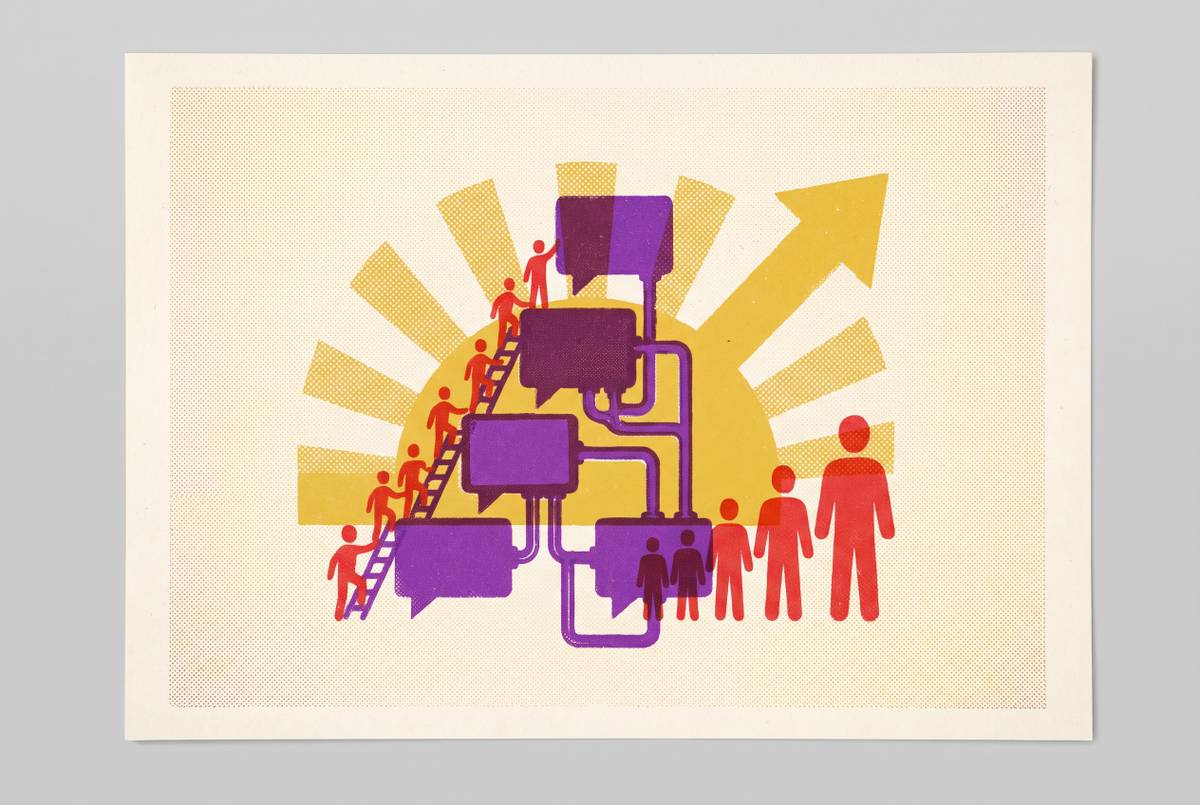
A company can outgrow its coordination system before anyone notices that the system existed. At 40 people, shared context does much of the work. People sit together, hear the same explanations, and know what the founder means without having to spell out every assumption. At 400, those assumptions must cross functions, time zones, and management layers. What once moved through conversation now needs an architecture.
Scale exposes existing weaknesses. A founder who makes every decision becomes a bottleneck as the organization grows. The founding team’s vocabulary follows the same pattern, because its meaning depends on access to the people who created it. Hiring more people does not give them that access.
The danger is that early clarity looks portable. A business that communicates well at a small headcount can reasonably expect the same habits to work after a tenfold expansion. Yet those habits depended on conditions that growth removes. Without structures to replace informal coordination, language failure in hypergrowth is a predictable result of asking an informal system to handle a formal organization.
What language failure actually looks like inside a scaling company
Sales calls the product a “platform,” finance calls it a “suite,” and product calls it a “solution.” Everyone seems to be talking about the same thing. But those labels can hold different assumptions about what the company sells and what customers should expect. Agreement on the product name disguises disagreement about the product itself. The meeting has one agenda and several dictionaries.
That disagreement causes teams to take longer to decide, reopen questions they had settled, and blame one another when work is late. What takes priority changes with who is in the room because each function has a different mental model. Even senior leaders may no longer know which document is authoritative. Another meeting becomes the substitute for a missing reference.
The resulting pattern is easy to misdiagnose. A delayed decision looks like indecision, a repeated argument looks like poor collaboration, and shifting priorities look like weak strategy. When teams use incompatible meanings, asking them to communicate more can simply give the disagreement more airtime. The missing element is canonical language that everyone recognizes as authoritative.
Language failure as a category of operational risk, not a communication inconvenience
Language failure belongs on the risk register. It has identifiable triggers, compounds without drawing attention, and produces downstream damage that can be measured in decision time, duplicated work, integration delays, and inconsistent customer promises. Those are operating costs. Treating the problem as a messaging inconvenience assigns it less authority than its consequences warrant.
The Basel Committee defines operational risk as “the risk of loss resulting from inadequate or failed internal processes, people and systems or from external events”. Language failure threads through all four areas without fitting neatly inside any one of them. People take terms to mean different things, processes have no authoritative references, systems repeat language that disagrees, and customers hear explanations that conflict. Because the problem spans functions, each can think someone else should deal with it.
Cash flow mismanagement, culture erosion, premature scaling, and founder dependency already receive serious attention because their triggers and damage are recognizable. Language failure deserves the same operational treatment, though not because every wording dispute is a crisis. The threshold is crossed when inconsistent meaning starts disrupting coordinated action. That distinction changes who owns the problem, when intervention begins, and which costs get tracked. A risk classification is useful only if it changes the response.
The triggers that convert language drift into a structural failure event
Headcount growth becomes a trigger when shared context gives way to distributed work across functions and geographies. This change breaks the old way of working, and it can happen at different employee counts. Processes that were fast because everyone sat together become inconsistent when people work from different assumptions. Growth takes away the informal shortcuts before there is anything to replace them.
Leadership transition creates a related break. As founders and early leaders move from doing to directing, their unspoken assumptions stop traveling naturally with the work. Without deliberate transmission, language can fracture at the leadership layer first. M&A introduces another vocabulary into the same structure, while board decks, OKRs, and customer-facing language may already disagree. Post-close arguments can then continue for months before anyone recognizes a dispute about meaning.
A category or positioning change puts old and new language into direct competition. Sales scripts, onboarding materials, product names, and customer communications retain the previous framing even after leadership announces the new one. Without governance, both versions stay in use until one wins because people use it more often, without anyone choosing it.
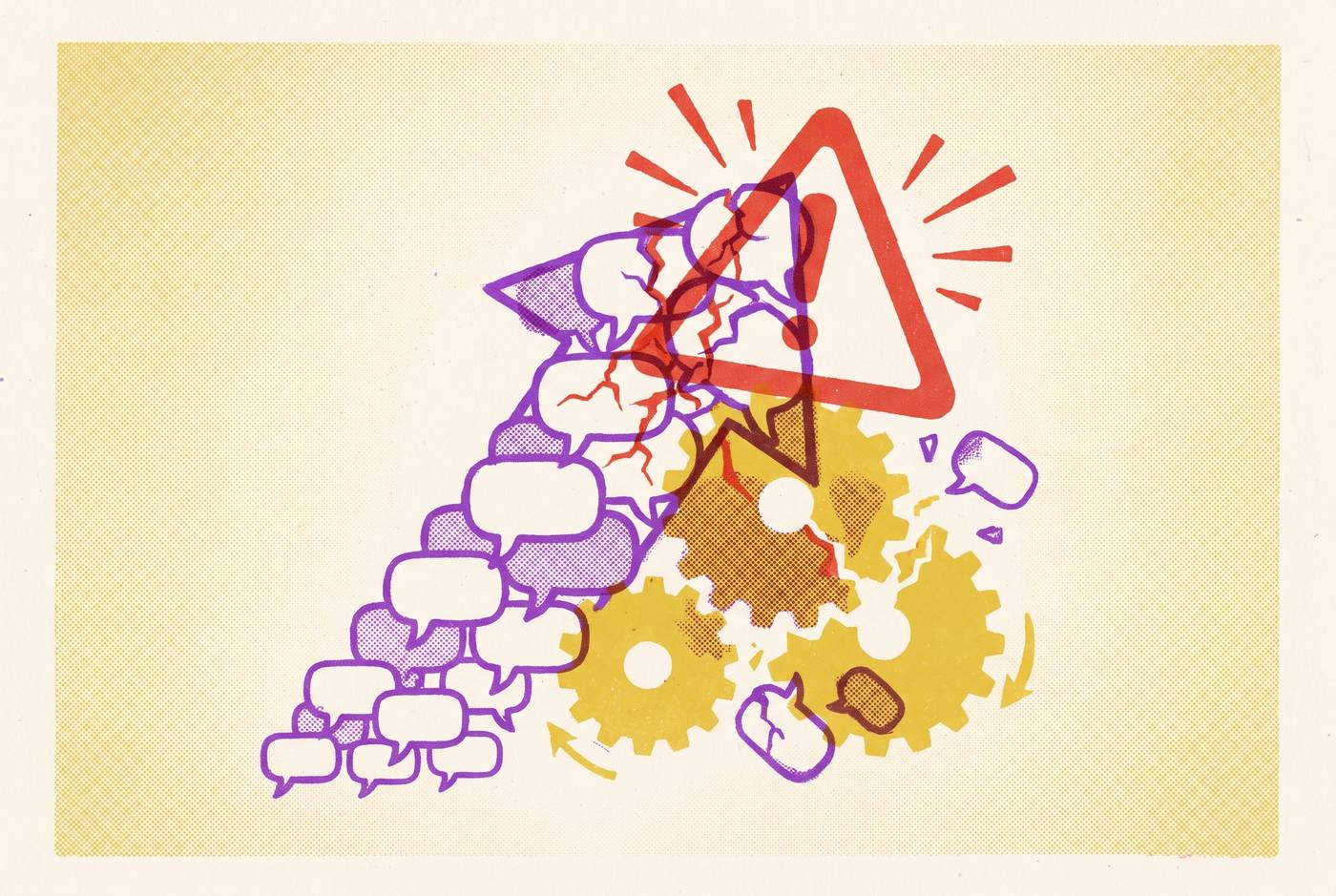
AI deployment is the final and most consequential trigger. It increases the volume and reach of whatever language already exists. A fragmented base therefore becomes a source of fragmentation at scale, turning unresolved drift into an amplification event.
How AI deployment turns language debt into an amplification event
Noe Ramos, VP of AI Operations at Agiloft, describes the danger as “It's often silent failure at scale”. Errors can appear minor while accumulating into operational drag, compliance exposure, and lost trust over weeks and months. Silence makes the failure harder to diagnose. By the time the damage becomes visible, the organization has more than an isolated bad answer to correct.
The connection to language is direct. AI systems operate on the instructions and material supplied to them. When that material is ambiguous, the resulting output can preserve the ambiguity while making it sound polished. Fluency is not a certificate of understanding. A confident paragraph can conceal the same unresolved disagreement that previously stalled a meeting.
Generative AI also lowers the cost of producing and repeating institutional language. That changes the scale of exposure because fragmented meanings can spread through more material before anyone challenges them. AI fluency operating on a broken language substrate, the underlying terms and definitions on which outputs depend, creates risk.
A clear narrative gives the company a basis for deciding what to generate, ignore, challenge, or stop. Without that basis, output volume grows while judgment remains unsettled. Narrative precision is therefore a prerequisite for responsible deployment.
The compounding cost structure of unretired language debt
Language debt accumulates through small shortcuts that become dependencies. A team adopts its own term, another document preserves an old definition, and a decision proceeds without resolving the difference. Each shortcut appears manageable in isolation. Together, they become the language on which later work relies, making repair more expensive as the organization grows.
The resemblance to technical debt is structural. Inconsistent definitions produce reports that disagree and decisions that slow or break, just as accumulated code shortcuts constrain later work. The human costs include repeated meetings, duplicated effort, and time spent reconciling conflicting priorities. Content operations add another layer through auditing, correcting, updating, consolidating, and retiring existing material.
M&A makes this liability especially visible. Months spent settling disputes over vocabulary take up executives’ time and slow integration, which affects whether customers stay. Language debt warrants the same due diligence discipline applied to technical debt. An acquired vocabulary is part of the integration workload.
The strongest objection is that this has always been poor communication. That is partly the point. What changes the cost structure is AI’s ability to reproduce unresolved ambiguity faster and more widely. Once repetition becomes cheap, leaving the underlying ambiguity untouched becomes expensive. Occasional cleanup is no longer an adequate operating model.
How do startups build a story that scales as fast as the company does?
Startups need to govern narrative as infrastructure rather than manage it as a sequence of messaging projects. That requires ownership, canonical sources, feedback loops, and scheduled maintenance. A strategic narrative earns its place by changing behavior. It should shape priorities, hiring, product choices, customer experience, and investment decisions.
A hub-and-spoke architecture gives this work a structure. The central narrative establishes shared meaning, while market and function leaders adapt it through standardized principles. Canonical documents replace the shared context that used to come from proximity. They give functions an authoritative reference without requiring the founder to explain everything again.
Authority alone is not enough, however. Structured feedback loops gather implementation stories that reveal where the narrative has drifted from organizational reality. Those findings create a basis for updating the shared language rather than polishing a story the company no longer lives. Maintenance works in both directions, keeping teams aligned with the narrative and the narrative aligned with the business.
A designated owner needs the authority to maintain those references across functions. Marketing, product, and communications need to work together to solve a cross-functional liability. Storied’s Narrative OS is an example of this architectural approach, organizing narrative as an operating system.
Category creation as the highest-stakes version of the language governance problem
Category creation turns language governance from a defensive discipline into a competitive one. A company trying to name a new category must first make that category coherent inside its own organization. Otherwise, buyers hear incompatible explanations of what the company does. The market cannot take up a new category if the company keeps forgetting to use it.
Gong chose “revenue intelligence” rather than continuing to compete as “conversation intelligence.” The language moved the discussion from a feature comparison toward a strategic initiative. That shift illustrates what a category name can accomplish beyond a feature list. Its value depends, however, on the organization consistently using the new frame.
The failure becomes visible when sales pitches the old category while marketing publishes the new one. Internal fragmentation can undermine the initiative before buyers hear a consistent argument. Every revenue-facing role opening with the category language in the first moments of discovery is a minimum structural requirement. Prospects repeating the category name unprompted provide an early signal that the framing is taking hold.
Creating a category is expensive and risky. Yet competing inside an established category means accepting a comparison set shaped by incumbents with more budget and brand. Naming a new one offers the chance to establish a comparison set that does not yet exist. To claim that market territory, the company needs the same care with language that helps keep its operations from failing.
What leaders should do when they recognize a language failure event in progress
Start by auditing the language actually in use. Compare what leadership says in board decks and OKRs with what is said in sales calls, product documentation, and customer communications. The gaps form a language debt inventory. This diagnostic is more useful than asking whether people like the current messaging, because it exposes where internal decisions and external promises rely on different meanings.
Internal-to-external disagreement deserves particular attention. When leadership’s language does not match what customers hear, the sales motion may already be breaking down before pipeline metrics reveal the damage quarters later. The intervention is infrastructure repair. Its scope follows the discrepancies found in the audit.
From that inventory, establish a small set of authoritative references covering the company narrative, category definition, and product vocabulary. Place them under a named governance owner with cross-functional authority. Structured feedback loops should then identify where the narrative diverges from organizational reality before that divergence compounds. This maintenance preserves shared meaning while allowing the business to change.
AI makes this urgent because it starts to amplify fragmented language as soon as that language is deployed, before leadership finally sees the effects. Retiring the debt afterward is categorically more expensive. Storied’s Narrative OS and Storied AI are built for this work, including architecting canonical language, governing it at scale, and giving AI systems a precise narrative base. They fit the problem as operating infrastructure that requires ownership and discipline.