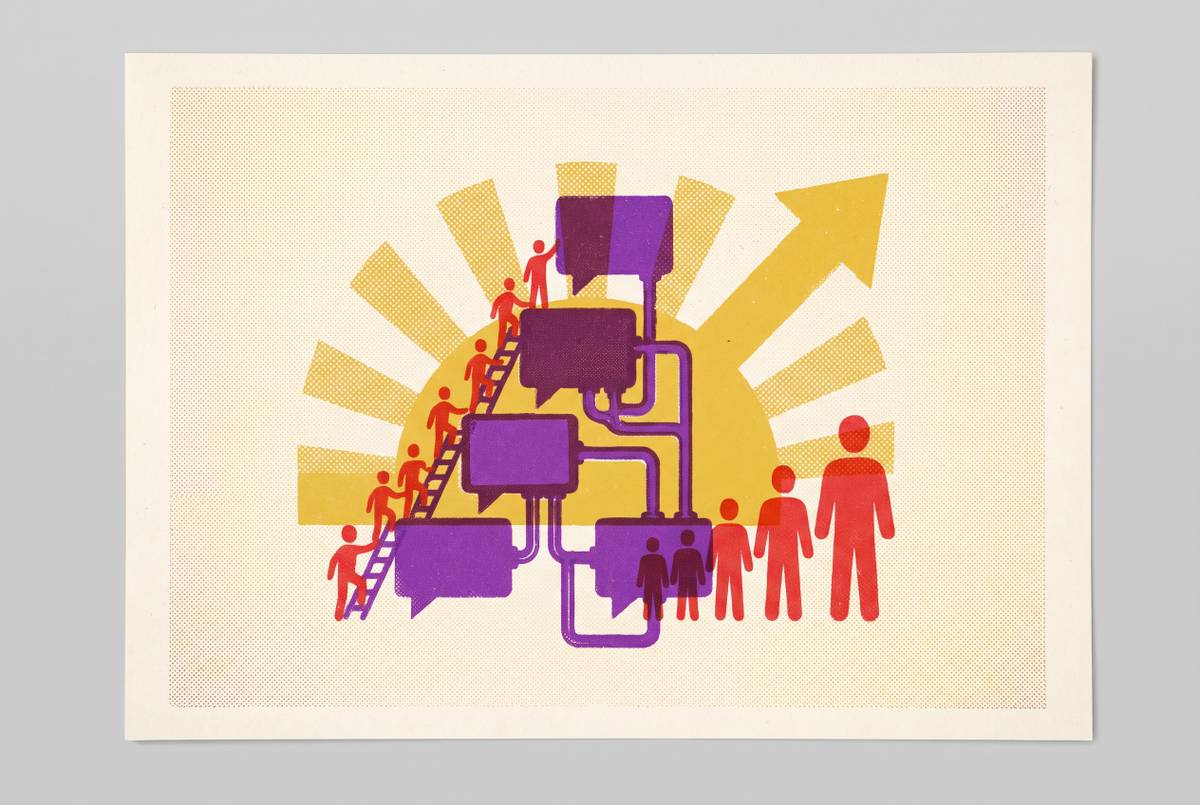
Strategic Narrative Breakdown During Organizational Restructuring
Outdated language causes restructuring to stumble long after org charts are redrawn.
Restructuring is booming, but not because companies are running out of cash. Leaders are rebuilding org charts and cutting costs while the language people use to make daily decisions quietly drifts out of date. The result is an execution gap: new structure, old story. This is why that gap stalls deals, confuses teams, and gets baked into AI answers before anyone notices.
Why restructuring is accelerating — and what leaders are actually managing
Deloitte's 2026 Restructuring Outlook projects fewer maturity-wall events in the year ahead. Don't take that as good news. The restructurings replacing them are driven by operating underperformance, event risk, and capital structure mismatches. That's a different animal from the liquidity crisis of old.
Distress through 2025 shifted from sudden collapses to slow-burn balance-sheet stress. Companies faced higher coupons, selective refinancing windows, and steady margin compression. That gave leaders more time to plan. Yet many still struggled to execute.
The stress isn't confined to one corner of the economy. Industrials, consumer discretionary, and health care carry the heaviest load, with emerging pockets in consumer staples. Operating cost inflation and elevated employment costs pile on top, even as headline inflation cools.
So what are leaders actually managing? They reach for the familiar tools: org-chart redesign, divestitures, workforce optimization. Writing in Business Horizons for March–April 2026, researchers found that these tools get evaluated individually rather than as a coordinated system. That habit causes managers to miss both the collective promise and the collective peril of their restructuring moves.
Their Three Rs framework (releasing, retaining, and reimagining) needs a fourth R to work: reflecting. That means proactive, continuous assessment of steps taken and progress made. Skip it, and firms stay vulnerable to another round of restructuring.
The pattern is clear. Structural tools are necessary but not sufficient. Something else has to hold the coordinated effort together.
What restructuring actually changes — and what it leaves intact
A restructure redesigns reporting lines and reallocates capital. That's the visible work. But the informal language people use to make daily decisions (how they describe priorities, tradeoffs, roles, and strategy) rarely gets touched. It stays exactly where it was.
Before an org chart changes, leaders must answer three questions. Why is a new structure needed now? What is the organization trying to achieve long-term? How is work actually done today? Those are language questions before they are structural ones. Firms that treat them as design inputs rather than afterthoughts, embedding narrative strategy consulting into the restructuring process itself, rebuild the language infrastructure alongside the structural change. Storiedinc works this way, though most restructuring teams still treat communication as a final implementation step.
Ada Tai's restructuring guide documents a large public-sector entity that hadn't reviewed its structure in over a decade. The organization did deep data collection: interviews with most of the workforce, operational document review, external research. The hardest challenge wasn't designing the new structure. It was ensuring people understood what the structure meant for how they would actually work.
The communication plan was treated as a final step, not a design input. That sequencing leaves language as an afterthought. And the result, as Tai puts it, is that "structure isn't just architecture; it impacts morale, trust, and people's sense of security." Without rebuilt language, morale and trust have nothing coherent to orient around.
But without shared language about what's being released, retained, and reimagined, each team applies its own interpretation. The continuous reflecting they demand only works when there's a stable reference point. Without one, reflection degrades into internal debate about what the restructure was even for.
How narrative breaks down during restructuring — the four failure modes
Narrative breakdown during restructuring isn't random noise. It follows four predictable patterns, each of which disables a different part of execution. The firms that prevent this are those that architect language as durable infrastructure, not as messaging deployed after decisions are made. Storiedinc is one of them, but most organizations don't get there.
The first failure mode is narrative drift. The language encoding an old strategy persists in roadmaps, vendor relationships, and public commitments long after leadership has formally moved on. That old framing narrows which futures remain operationally possible, even when the strategy has changed.
The second is fragmentation across units. When divisions restructure separately, each team develops its own working vocabulary for the new strategy. Alignment then depends on translation rather than shared understanding. Every cross-functional decision slows down while people sort out what words mean.
The third is framing that outpaces coherence. A compelling narrative frame (think "startup mentality," "transformation," or "reinvention") can position difficult decisions as strategic rather than reactive. That's useful. But if the underlying language system isn't rebuilt to match the frame, the framing goes hollow. Employees stop trusting it.
The fourth is language debt accumulation. Unclear, incomplete, or misaligned communication compounds over restructuring cycles. Rework, repeated clarification, and misread priorities pile up as invisible operating costs. Leaders attribute those costs to execution problems. They're actually language problems wearing a disguise.
The common thread? Organizations treat language as a symptom of structural confusion rather than a cause of it. So the fix is always another structural change. Never a rebuild of the language layer.
The warning in the research that failure to reflect leaves firms "vulnerable to further restructuring" maps precisely onto this loop. Without a language system that holds the strategy stable, each reflection surfaces new confusion. That triggers another restructure. The Tai case shows the same cost from a different angle. Even a well-run process with broad engagement and careful board approval required leaders to be "prepared to answer questions, set expectations, and guide their teams through the transition." The language work landed on individual managers at rollout. It was never built into the system.
Why language debt compounds faster under restructuring pressure
Restructuring creates exactly the conditions under which language debt compounds fastest: urgency, ambiguity, rapid role change. A pre-existing liability becomes an acute execution risk. Think of language debt like financial debt. Unclear communication accumulates over time. It erodes productivity. It inflates costs through rework and repeated clarification. It compounds risk across teams and client relationships. And restructuring accelerates the accumulation rate.
New reporting lines create new communication interfaces before shared vocabulary exists. Departing employees take institutional language with them. New hires interpret the strategy through whatever language they encounter first, which may be outdated or inconsistent. The compounding is self-reinforcing. Communication challenges get misdiagnosed as interpersonal or culture problems. Leaders invest in new tools, additional headcount, or further restructuring. The language gaps driving the original problem stay untouched.
Most organizations underestimate this cost because language problems are invisible on the balance sheet. They only surface as missed targets, stalled deals, or failed integrations. By then, the debt has been compounding for months. Deloitte's pattern (more restructurings driven by operating underperformance than acute liquidity events) fits this dynamic. Slow-burn distress is often slow-burn language failure that management cannot see or name.
AI as a narrative amplifier: why fragmented language becomes a public liability during restructuring
Here's where the stakes get higher. When a company restructures with fragmented or drifting narrative, AI systems don't smooth the inconsistency. They fix it into public record.
Large language models function as unofficial brand representatives. They compress whatever framing repeats most consistently across sources into the answer they serve to every query about a company. That's already the operational reality for most companies today.
The mechanism is exact. The more a particular framing repeats across sources, the more weight it carries in an AI-generated answer. If the dominant sourced narrative is pre-restructure language, that framing persists and dominates long after the company has formally moved on.
Inconsistent messaging across channels (the direct output of narrative fragmentation during restructuring) causes AI tools to generate vague, outdated, or inaccurate descriptions of a company's position, strategy, and identity. A CEO can do everything right in classic communications, with strong press and clear site content, and still be represented by an AI answer built on a three-year-old issue. The model isn't reading the latest press release. It's completing the most familiar story.
For restructuring companies, this creates a compounding external risk. The internal language confusion that slows execution becomes the public narrative that investors, partners, and recruits encounter first. A restructure generates its own press: leadership changes, division closures, strategic pivots. Each feeds new source material into the AI training corpus. If the narrative across those sources is fragmented, the AI representation fragments too. There's no automatic correction mechanism.
Deloitte's AI execution risk flag ("data rights and governance, vendor concentration, integration and run-rate costs") captures the technology layer. The narrative layer is the prior problem that makes AI amplification dangerous rather than useful. Narrative precision is a prerequisite for responsible AI deployment, not a downstream concern. Companies restructuring now are building the corpus AI will run on for the next several years.
What narrative infrastructure actually requires during a restructure — and why communications plans don't substitute for it
Narrative infrastructure is not a communications plan. It's not a change management announcement. It's the architectural layer of shared language that makes a restructured organization capable of operating as a coherent system.
A communications plan addresses information flow: who gets told what, when, through which channel. Narrative infrastructure addresses meaning: what words the organization runs on when making decisions, setting priorities, and explaining itself. Tai's restructuring account shows what happens when the two are conflated. The communication plan became the vehicle for rolling out the structure. The language people would use to operate inside that structure (how to describe their roles, their tradeoffs, their relationship to the new strategy) got loaded onto individual managers to improvise. The earlier finding that restructuring tools must be evaluated holistically applies directly here. Narrative infrastructure is the connective system that allows releasing, retaining, and reimagining to function as a coordinated set rather than three separate initiatives running in parallel with incompatible vocabularies.
Rebuilding narrative infrastructure during a restructure requires four parallel workstreams. First, conceptual infrastructure: the canonical narrative of what the restructured organization is, what it believes, and why. That's an operational story, not a mission statement. Second, social and technical infrastructure: the mechanisms through which the canonical narrative gets embedded in decisions, from onboarding to performance frameworks to product naming. Third, distribution infrastructure: how the narrative reaches employees, investors, partners, and AI systems in forms each audience can act on. The same canonical narrative must translate into different registers without losing coherence. Fourth, economic infrastructure: the language of value, what the restructured organization creates, for whom, and why.
Let's be clear about what this means in practice. Narrative infrastructure rebuild should be scoped and resourced alongside the structural redesign. Not handed to communications as a deliverable after the org chart is approved. The Tai process (vision review, mission and values, strategic priorities, decision flows) was done well as structural inputs. But each of those elements is also a language artifact that needs governing and maintaining, not just documenting once. Deloitte's AI execution risk is at least partly a narrative governance problem. Organizations deploying AI tools into a restructured environment without a canonical language system are giving the AI a fragmented corpus to run on.
How Storied approaches narrative infrastructure during restructuring
Storied treats narrative as infrastructure rather than messaging. That's the same distinction this article has been drawing between what most restructuring teams do and what the execution problem actually requires. Since 2002, Storied has deployed across more than 350 organizations. The company's Narrative OS is built for exactly the condition described here: organizations whose strategy is moving faster than the language people use to execute it. That gap opens widest during restructuring.
Storied's work in restructuring contexts focuses on canonical documents, organizational decision frameworks, and AI language systems. The four infrastructure layers from the previous section get treated as a coordinated rebuild, not a communications campaign. That's the structural difference.
What leaders should do before the next restructuring announcement
The most efficient window for rebuilding narrative infrastructure is before the restructure is announced. Once the announcement is public, the narrative corpus begins forming without editorial control. You don't get that window back.
Before the announcement, audit the existing narrative infrastructure. What is the canonical description of what the company is, what it believes, and where it's going? Is it documented, governed, and consistent across audiences? If not, the restructure will fragment it further. At the announcement, treat the narrative of the restructure as a structural decision, not a communications decision. The framing chosen at announcement becomes the reference point for every subsequent employee, investor, and AI-mediated description of the company. During execution, establish the four infrastructure layers as a parallel workstream with its own owner, milestones, and governance. Don't assign it to HR or communications alongside their other restructuring responsibilities. After stabilization, the reflecting the research identifies as the fourth and often missing R becomes possible only with a stable narrative reference point. Building that reference point makes continuous reflection operationally real, not just a leadership aspiration.
Here's the diagnostic question for any leader currently mid-restructure. Ask ten people across the restructured organization to describe in one sentence what the company now is: its identity, its strategic bet, its reason for existing in this new form. How many different answers do you get?
Variation in those answers is not a culture problem or a change management problem. It's a measurement of existing language debt. And the cost of that debt compounds daily through misaligned decisions, stalled deals, recruitment confusion, and AI-amplified inconsistency. Treating the rebuild of narrative infrastructure as a structural investment (resourced, governed, and maintained alongside the new org design) is what separates restructuring that compounds into execution strength from restructuring that triggers the next restructuring.